

Offshore staffing research
Evidence for role scope, controls, and handoffs
Review the source record, method, limits, and operating context behind staffing scope, access, review, coverage, and handoff decisions.

How Consistent Are Meeting Notes Across Offshore Executive Assistants?
A paired-review method for measuring whether meeting notes capture the same decisions and actions when different assistants document similar meetings.

How Long Do Offshore Account Recovery Cases Wait for Evidence?
A time-to-evidence study for account recovery queues, separating customer delay, agent delay, and security review time in a reproducible sample.

How Much Rework Follows a New Client Transition?
A before-and-after method for measuring rework after a client transition, with a definition that separates clarification, correction, and a changed requirement.

How Often Do Offshore Handover Notes Omit the Next Action?
A sampling method for measuring handover notes that lack a usable next action, with a definition that separates a status update from a decision blocker.
How Often Do Offshore Teams Retain Records Past Their Disposal Date?
A retention audit for offshore back office records, with a coding scheme that separates an expired record from an inaccessible or legally held one.
What Share of Interview Scorecards Use Unsupported Ratings?
A scorecard audit that measures ratings without observable evidence, separating a missing note from a rating that contradicts the interview record.

What Share of Vendor Invoice Exceptions Lack an Approval Record?
An audit method for measuring invoice exceptions that were released without a named approval, with a coding scheme that separates a missing record from an inaccessible one.

How Many Closed Offshore Exceptions Lack Supporting Evidence?
An evidence audit for closed exceptions, with a coding scheme that separates a missing record from an inaccessible or ambiguous one.

How Much Rework Follows a Change in a Client Source System?
A before-and-after cohort method for measuring rework after a source-system change, separating migration defects from instruction gaps.

How Much Time Do Offshore Staff Lose to Tool Permission Waits Each Month?
A time-study method for permission waits, separating blocked work from a workaround that keeps the queue moving.
How Often Do Offshore Teams Reopen Closed Queue Items Within Seven Days?
A cohort method for measuring seven-day reopen rates, separating a genuine reopen from a duplicate ticket or a routine follow-up.

How Stable Is Offshore Output Quality Across Weekend and Weekday Shifts?
A matched-sample method for comparing weekend and weekday quality without confusing task mix, staffing, and review coverage.

What Happens to Exception Aging When an Offshore Team Adds a Client?
An event-window study for measuring how a new client changes exception inflow, aging, and recovery time in an existing queue.

What Share of Offshore Quality Findings Repeat in Consecutive Reviews?
A paired-review method for measuring repeat findings, separating a persistent instruction gap from a new defect with the same label.
Can an Offshore Team Reproduce a Redaction Decision From Written Rules?
A reproducibility test for redaction rules, with independent decisions, agreement scoring, and a repair loop for unclear instructions.

Does a Written Knowledge Base Reduce Repeat Questions in Offshore Support?
A practical evaluation design for testing whether a knowledge base actually reduces repeated questions in an offshore queue.
How Long Does a Quality Hold Add to an Offshore Queue Item?
A time-study method for measuring the delay a quality hold adds, separating the pause decision from the release wait.

How Much Onboarding Knowledge Leaves When an Onshore Manager Departs?
A coverage method for measuring the onboarding knowledge held by one manager and testing what survives a transfer.
How Reliable Is a Knowledge Base Owner Map After a Team Change?
A verification method for testing whether each knowledge base article still has a live, authorized owner after a team change.
Measuring Reviewer Drift Across a Long Offshore Quality Cycle
A calibration method for detecting reviewer drift over months, separating a changed standard from a changed reviewer.

What Share of Offshore Rework Traces to Unclear Acceptance Criteria?
A reproducible method for coding returned offshore work so a team can separate unclear instructions from execution errors.
A Method for Auditing Stop-Work Decisions in Offshore Support Queues
How to sample the moments when offshore staff paused work, verify the reason, and tell a good stop from an unnecessary delay.
A Method for Testing Whether Offshore Work Samples Predict Live Queue Accuracy
How to compare candidate work-sample scores with later live quality so a hiring exercise earns its place in the process.
Can an Offshore Team Reproduce a Client's Priority Ranking From Written Rules?
A test for whether written priority rules produce the same order when different offshore team members apply them to the same queue.

Do Offshore Escalations Arrive With the Evidence a Manager Needs?
A coding method for checking whether offshore escalations carry the record, the rule, and the exact decision a manager must make.
How Long Does an Offshore Queue Item Wait for Missing Client Input?
A method for measuring the waiting time created by missing client information and separating it from ordinary processing time.
How Much Manager Time Does a Weekly Offshore Quality Review Consume?
A measurement protocol for the review, correction, and follow-up time a weekly offshore quality sample actually requires.

Testing Whether Offshore Shift Handovers Preserve Deadline Context
A reconstruction test for whether a shift handover carries the deadlines, dependencies, and consequences the next shift needs.
A Method for Auditing Shadow Tool Use in Offshore Support Roles
A repeatable audit for finding unapproved tools, storage locations, and workarounds in an offshore support role without turning the review into a surveillance exercise.

A Method for Auditing Template Adherence in Offshore Client Updates
A sampling method for checking whether recurring client updates follow the approved template, and for separating a real omission from a harmless variation.
A Method for Verifying Data Deletion in Offshore Support Tools
How to test whether deleted customer records are actually removed from an offshore support tool, its exports, and its backups.

Can Offshore Staff Explain the Current Version of Their Instructions?
A short verification protocol for whether an offshore worker understands the instruction version they are expected to follow, not just whether they can open the document.
Do Offshore Timesheets Reconcile with System Activity Records?
A reconciliation method for comparing offshore timesheets with queue, login, and ticket activity without treating every minute of silence as a problem.
How Complete Are Equipment Return Records When an Offshore Role Ends?
A record-completeness study design for laptops, headsets, tokens, and other equipment issued to an offshore worker at the end of a role.
Measuring Idle Time Between Offshore Queue Items
A practical method for measuring the gap between completed queue items, separating healthy recovery time from hidden waiting and lost capacity.

A Method for Testing Backup Coverage in Offshore Support Roles
A repeatable test for whether a backup arrangement actually covers an offshore support role when the primary owner is away.

Estimating Ramp Time for New Offshore Hires from Work Records
A method for estimating how long a new offshore hire needs to reach independent output using queue and review records.

Evidence Standards for Offshore Staffing Cost Comparisons
A method for comparing offshore staffing options with total-cost evidence instead of headline rates.

How Complete Are Access Removal Records After an Offshore Contractor Exits?
A measurement protocol for checking whether access removal after an offshore contractor exit leaves a complete, reviewable record.

How to Evaluate Schedule Overlap Requirements for Offshore Roles
A structured approach to deciding how much live schedule overlap an offshore role needs and what that overlap costs.

Measuring Handoff Delay in a Philippines-Based Support Queue
A method for separating waiting time from work time when a support queue crosses an onshore and Philippines-based team.

What Does Reviewer Agreement Tell You About Offshore Quality Sampling?
How to interpret reviewer agreement in offshore quality sampling without mistaking consistency for accuracy.
Can the backup exercise coverage report be reproduced from its sources?
Evidence-led research on backup exercise coverage in offshore resourcing operations.
Do exceptions in the timesheet dispute first review queue clear within one business day?
Evidence-led research on timesheet dispute first review in offshore resourcing operations.

How complete is the evidence in the approval expiry tracking record?
Evidence-led research on approval expiry tracking in offshore resourcing operations.
How old are the exceptions in the quality calibration rubric queue?
Evidence-led research on quality calibration rubric in offshore resourcing operations.
How stable is training record retirement coverage when one specialist is away?
Evidence-led research on training record retirement in offshore resourcing operations.
What happens to handoff destination receipt coverage when the owner is away?
Evidence-led research on handoff destination receipt in offshore resourcing operations.

Where does delay accumulate in the departed contractor access evidence handoff?
Evidence-led research on departed contractor access evidence in offshore resourcing operations.

Can the vendor handoff acceptance report be reproduced from its sources?
Evidence-led research on vendor handoff acceptance in offshore resourcing operations.

Do exceptions in the backup coverage proof queue clear within one business day?
Evidence-led research on backup coverage proof in offshore resourcing operations.

How complete is the evidence in the role scope control record?
Evidence-led research on role scope control in offshore resourcing operations.
How old are the exceptions in the access removal evidence queue?
Evidence-led research on access removal evidence in offshore resourcing operations.
How stable is timesheet dispute routing coverage when one specialist is away?
Evidence-led research on timesheet dispute routing in offshore resourcing operations.

What happens to quality sampling cadence coverage when the owner is away?
Evidence-led research on quality sampling cadence in offshore resourcing operations.

Where does delay accumulate in the approval clock evidence handoff?
Evidence-led research on approval clock evidence in offshore resourcing operations.
How Quickly Is Access Removed?
Time from assignment end to removal.

What Does a Weekly Quality Sample Find?
Defect patterns in sampled offshore work.
How Fast Are Rate Changes Approved?
Time from request to approved rate.

How Long Do Offshore Supplier Placements Take?
Time from intake to confirmed start.
Which Vetting Documents Arrive Missing?
Completeness of candidate vetting packets.
Where Do Dependencies Add Delay in offshore recruitment and managed staffing?
A protocol separating upstream wait, owner wait, and rework in offshore recruitment and managed staffing dependency chains.
Do Reviewers Agree on Work Priority in offshore recruitment and managed staffing?
A protocol testing whether independent reviewers assign the same priority band to the same offshore recruitment and managed staffing item.
How Often Do Customer Promises Hold in offshore recruitment and managed staffing?
A protocol comparing the promise date, the verified completion, and the reason for any gap in offshore recruitment and managed staffing.
How Much Work Is Rework in offshore recruitment and managed staffing?
A protocol measuring repeat effort caused by missing evidence, wrong scope, or a failed check in offshore recruitment and managed staffing.
When Does the Service Clock Start in offshore recruitment and managed staffing?
A protocol measuring the gap between the defined clock event and the timestamp recorded in offshore recruitment and managed staffing.
Where Does Capacity Go in offshore recruitment and managed staffing?
A protocol separating planned work, exceptions, rework, and waiting in a offshore recruitment and managed staffing team's available hours.
Did the Process Change Reach the Work in offshore recruitment and managed staffing?
A protocol comparing records before and after a written offshore recruitment and managed staffing process change to see whether the new step was used.
Why Do Files Come Back Incomplete in offshore recruitment and managed staffing?
A protocol measuring which required fields are missing at first review and what causes the return.
Are Approvals Routed at the Right Level in offshore recruitment and managed staffing?
A protocol testing whether sampled offshore recruitment and managed staffing approvals used the level required by the written threshold.
How Consistently Are Requests Triaged in offshore recruitment and managed staffing?
A protocol for measuring whether independent reviewers assign the same triage class and owner to the same offshore recruitment and managed staffing request.
How Long Does offshore recruitment and managed staffing Access Outlive the Assignment?
A protocol measuring the gap between assignment end and access removal for offshore recruitment and managed staffing work.
Can a Second Reviewer Continue the Handoff?
A protocol measuring whether offshore recruitment and managed staffing handoffs carry the source, state, owner, and next action.
How Complete Is the offshore recruitment and managed staffing Intake Record at First Review?
A protocol for measuring whether offshore recruitment and managed staffing intake items carry the source, owner, and date needed before work begins.
Where Does offshore recruitment and managed staffing Queue Time Actually Go?
A protocol separating owner wait, source wait, system delay, and rework in offshore recruitment and managed staffing queues.
Do Reviewers Agree on offshore recruitment and managed staffing Exception Codes?
A protocol testing whether independent reviewers assign the same exception reason to the same offshore recruitment and managed staffing record.
A review method for early attrition signals in offshore roles
A cautious method for combining work signals and conversations to identify retention risk without scoring personality.
Measuring time to first independent work in offshore onboarding
A bounded method for recording how long a new offshore hire needs before completing a standard task without corrections, with cohort rules and limits.
Analyzing holiday coverage demand for Philippines-based teams
A method for classifying work that must continue during Philippine holidays and estimating the coverage actually required.
Auditing remote access provisioning latency
A method for measuring the time between an approved access request and a working account, with handoff and rework categories.
Measuring time-zone overlap capacity, not just hours
A method for estimating usable overlap between onshore and Philippines-based teams, accounting for meetings, handoffs, and interruptions.
Measure Access-Removal Latency after Role Changes
Source-backed research on access-removal latency with a bounded unit, limitations, and implementation checks.
Study Recovery Evidence from Offshore Backup Drills
Source-backed research on backup drill recovery with a bounded unit, limitations, and implementation checks.
Study Aging in Client Decision Wait Queues
Source-backed research on client decision-wait aging with a bounded unit, limitations, and implementation checks.
Evaluate Consistency between Instructions and Examples
Source-backed research on instruction-example consistency with a bounded unit, limitations, and implementation checks.
Analyze Selection Bias in Offshore Quality Reviews
Source-backed research on quality-review selection bias with a bounded unit, limitations, and implementation checks.
Backup Coverage Activation Reliability in Offshore Operations
Source-backed research on backup coverage activation with a bounded unit, explicit limitations, and implementation checks for distributed operations.
Evidence Completeness in Offshore Role Pilots
Source-backed research on pilot evidence completeness with a bounded unit, explicit limitations, and implementation checks for distributed operations.
Least-Privilege Decay in Distributed Staffing
Source-backed research on least-privilege decay with a bounded unit, explicit limitations, and implementation checks for distributed operations.
Manager Review Latency and Distributed Service Reliability
Source-backed research on manager review latency with a bounded unit, explicit limitations, and implementation checks for distributed operations.
Queue Age Distribution Versus Average Response Time
Source-backed research on queue age distribution with a bounded unit, explicit limitations, and implementation checks for distributed operations.

Access Revocation Evidence for Offshore Role Changes
A source-led study of access revocation evidence using a defined population, chronology, authority boundary, independent review, and verifiable destination evidence.
Backup Coverage Reliability in Offshore Operations
A source-led study of backup coverage reliability using a defined population, chronology, authority boundary, independent review, and verifiable destination evidence.
Measuring Handoff Completeness Across an Offshore Team
A source-led study of handoff completeness using a defined population, chronology, authority boundary, independent review, and verifiable destination evidence.
Manager Review Capacity in Offshore Resourcing: A Bounded Observational Study
A source-led study of manager review capacity using a defined population, chronology, authority boundary, independent review, and verifiable destination evidence.
Observing Scope Drift in an Offshore Resourcing Engagement
A source-led study of scope drift using a defined population, chronology, authority boundary, independent review, and verifiable destination evidence.

How to Verify Access Readiness Before Offshore Staff Start
A least-privilege readiness gate for accounts, devices, training, evidence, exceptions, and early review before a new offshore role handles live work.

How Much Buyer Approval Capacity Does an Offshore Team Need?
A measurement method for finding approval bottlenecks before adding offshore staffing capacity, without transferring decision authority by accident.
How to Review a Data Processing Agreement for Philippines Offshore Staffing
A buyer-focused method for mapping personal-data instructions, safeguards, subcontractors, incidents, return, and deletion before offshore work begins.

How to Evaluate Connectivity Continuity for Philippines Offshore Staff
A risk-based method for testing primary internet, backup paths, power, devices, communications, and recovery against the work that must continue.
How to Build a Philippines Offshore Staffing Holiday Coverage Plan
A practical method for turning official holiday notices, buyer demand, staffing rules, and handoffs into a testable coverage calendar.
Dedicated Offshore Staff or a Managed Service? A Philippines Buyer Framework
A source-backed framework for choosing between a dedicated Philippines-based role and a provider-managed service around ownership, variability, controls, and evidence.
First Offshore Hire or Small Team? A Philippines Capacity Decision
A research-backed method for deciding whether recurring work needs one Philippines-based offshore hire, shared backup, or a small team.
Who Should Provide Equipment for Philippines-Based Offshore Staff?
A decision framework for assigning device, connectivity, support, security, privacy, continuity, asset, and exit responsibilities for Philippines-based offshore work.
How to Compare Philippines Offshore Staffing Quotes on Equal Terms
A source-backed quote normalization method covering role scope, currency, statutory assumptions, management effort, controls, variability, and exit costs.
How to Review an Offshore Staffing Replacement Clause
A practical, source-backed method for testing replacement triggers, continuity, access, worker treatment, acceptance, and commercial terms in a Philippines staffing proposal.
EOR, Staffing, or Managed Service? Map the Responsibilities Before Comparing
A practical research framework for comparing offshore hiring structures by control, supervision, data, continuity, and retained buyer work.
Designing a Fair Work Sample for an Offshore Candidate
A decision-grade guide to creating a short, job-related, consistently scored work sample for candidates in the Philippines or any remote market.
Exit Readiness for a Philippines-Based Offshore Staffing Arrangement
A research-backed plan for transferring work, closing access, returning data, and protecting continuity when an offshore staffing arrangement ends.
How to Review an Offshore Staffing Provider's Evidence Before You Buy
A source-backed method for testing provider claims, operating controls, and role fit before committing a Philippines-based offshore hire.
Service Levels for Offshore Staffing Without Rewarding the Wrong Work
A research-backed method for defining acceptance, timing, quality, exclusions, and escalation in Philippines-based offshore support.
Subcontractor Visibility in Offshore Staffing: A Buyer Review Method
A practical method for tracing subcontractors, subprocessors, locations, access, and change duties in a Philippines-based staffing service.
Data Access Tiers for Philippines-Based Offshore Staff
A practical evidence-based model for limiting, approving, reviewing, and withdrawing system access as a Philippines-based offshore role expands.
A Total-Cost Model for Hiring Philippines-Based Offshore Staff
A transparent model for comparing direct hire, agency, and service-provider options without reducing an offshore staffing decision to a salary quote.

Which Work Fits a Philippines-Based Offshore Role? A Suitability Framework
A source-backed method for deciding which tasks belong in a first Philippines-based offshore role, which need stronger controls, and which should stay in-house.
How Much Time-Zone Overlap Does a Philippines-Based Offshore Role Need?
A research-backed method for choosing synchronous overlap from task dependencies, service windows, handoffs, and night-work risk rather than habit.

Testing Reproducibility in Offshore Access Reviews
A bounded research design for examining access-review reproducibility in distributed operations without overstating causal evidence.

Observing Completeness in Offshore Work Intake
A bounded research design for examining intake completeness in distributed operations without overstating causal evidence.

Designing a Philippines Offshore Escalation Quality Study
A bounded research design for examining escalation record quality in distributed operations without overstating causal evidence.

An Observation Framework for Remote Coverage Recovery
A bounded research design for examining coverage recovery in distributed operations without overstating causal evidence.

A Bounded Method for Measuring Remote Handoff Delay
A bounded research design for examining handoff delay in distributed operations without overstating causal evidence.
How to Measure Offshore Handoff Completeness
A bounded research design for examining handoff completeness in distributed operations without overstating causal evidence.
Designing a Reviewer Agreement Study for Offshore Work
A bounded research design for examining reviewer agreement in distributed operations without overstating causal evidence.
Measuring Escalation Latency in Philippines Offshore Operations
A bounded research design for examining escalation latency in distributed operations without overstating causal evidence.
A Bounded Audit Method for Remote Instruction Decay
A bounded research design for examining instruction decay in distributed operations without overstating causal evidence.
A Framework for Observing Remote Queue Aging
A bounded research design for examining queue aging in distributed operations without overstating causal evidence.
Completeness of asynchronous editorial decision records
Research-backed criteria for recording editorial decisions that must travel across owners and time zones.

Measuring article correction response without hiding quality risk
A research synthesis on correction timestamps, severity, verification, and responsible interpretation of response-time measures.
Version consistency in distributed editorial rubrics
A research review of change records, reviewer agreement, and safe interpretation of rubric scores across versions.

Measuring wait states in an offshore editorial queue
A research synthesis on timestamps, queue measures, and the decisions that waiting-time data can and cannot support.

Source access friction in offshore research work
Evidence-based guidance for distinguishing access failures from research-quality failures in distributed article production.

Information completeness at offshore editorial handoffs
Research synthesis on what a handoff record needs to reduce reconstruction and unsafe assumptions.

What Little's Law can and cannot tell an offshore editorial queue
A bounded desk study of throughput, work in progress, and elapsed time in daily article production.
Risk-based sampling for offshore editorial review
A practical research synthesis on sample design, defect evidence, and the limits of partial review.

Source volatility and recheck timing for staffing research
A framework for deciding which article claims need re-verification before publication or refresh.

Reviewer agreement in distributed editorial quality checks
Research on rubric clarity, calibration, and what disagreement reveals in an offshore review lane.
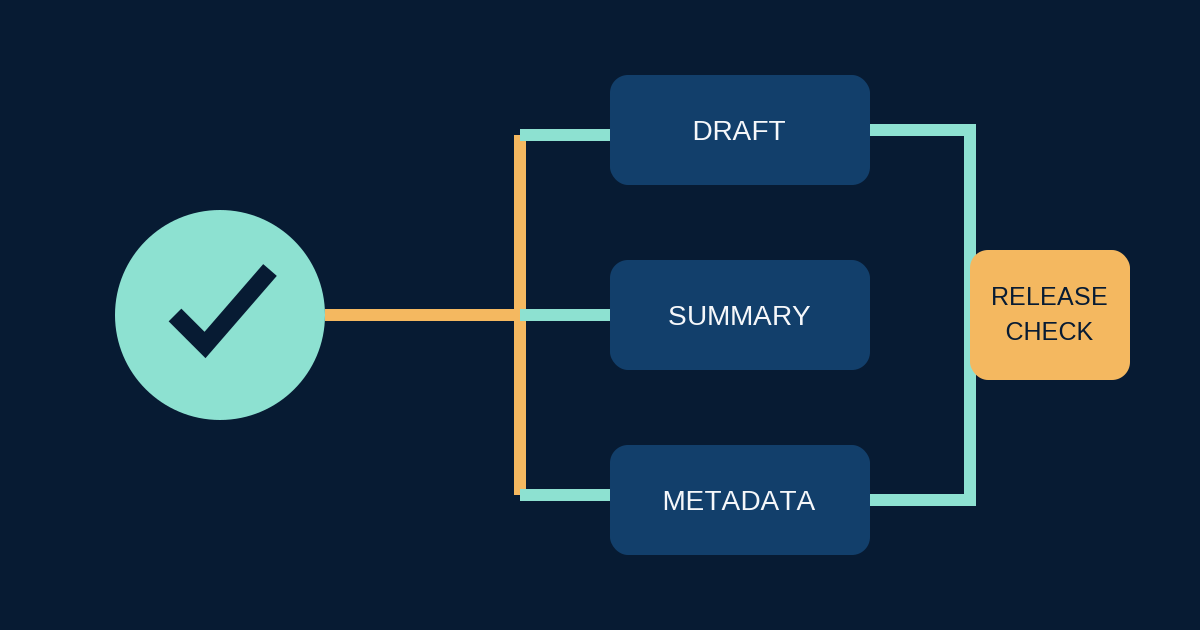
Measuring correction detection lag in offshore article publishing
A source-backed method for measuring how quickly factual, metadata, link, and image defects become visible after publication.
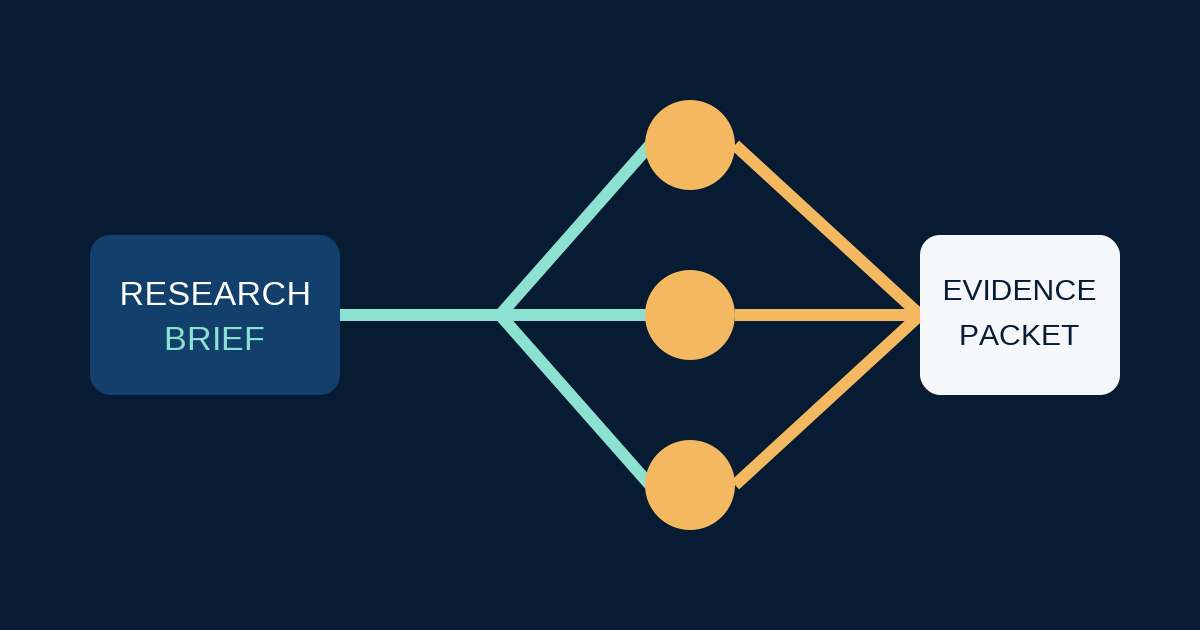
How much clarification burden comes from an incomplete offshore content brief?
A research protocol for testing whether missing brief decisions create avoidable questions, search pivots, and article rework.
Can a shared definition of done reduce offshore article handoff disputes?
A research design for testing whether explicit completion evidence improves agreement across writing, review, and publishing roles.
Do overlap hours improve decision yield in offshore editorial work?
A practical study of whether shared working time resolves consequential content decisions rather than duplicating routine status updates.
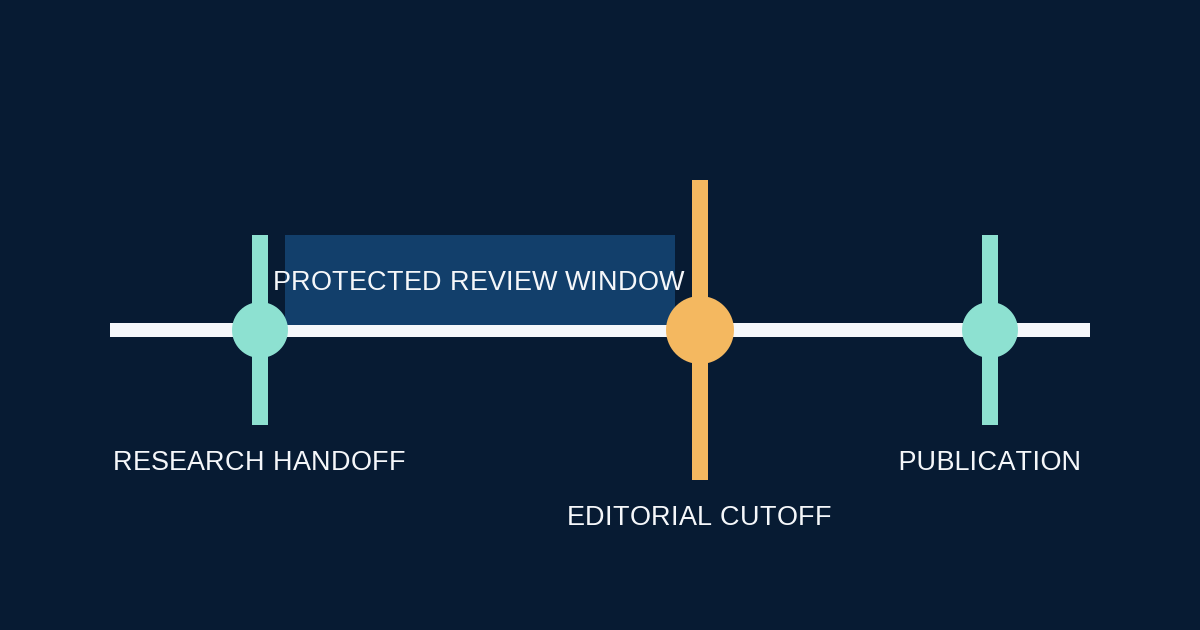
Does editorial queue age reveal decision latency in offshore content teams?
A bounded study design for separating productive work, ordinary waiting, and delayed owner decisions in recurring article production.
Does article batch size affect offshore publishing quality?
A practical research design for comparing batch size with review waiting, acceptance, and live-content defects.
How should an offshore content team measure review interruption cost?
A cautious study plan for measuring how interruptions affect editorial review time, accuracy, and queue recovery.
How can distributed editors detect review calibration drift?
A bounded method for checking whether editors apply article acceptance criteria consistently across time, topics, and shifts.
Does handoff completeness predict offshore editorial delays?
A measurement design for testing whether complete editorial handoffs reduce waiting and avoidable rework in distributed article production.
Can source traceability shorten offshore article corrections?
A research framework for testing whether claim-level source records improve correction speed without encouraging shallow verification.
How should an offshore content team measure correction latency?
A research framework for measuring how quickly published article defects are contained and verified.
Does reviewer calibration improve offshore article consistency?
A bounded evidence design for testing whether shared examples reduce disagreement in article acceptance.
Do work-in-progress limits improve offshore editorial flow?
Evidence and measurement limits for testing WIP limits in a Philippines-based daily article workflow.

How should daily offshore articles be sampled after publication?
A risk-based sampling design for checking live article dates, metadata, images, links, and presentation.
Can source access constraints bias offshore article research?
Evidence scope and audit design for detecting how source availability changes a daily research brief.
How much decision context survives an asynchronous offshore handoff?
A trace-based study design for measuring which facts, qualifications, and open decisions survive handoffs in Philippines-based support work.

What does a priority reversal cost an offshore support queue?
A measurement model for separating useful reprioritization from avoidable switching, rework, and decision delay in Philippines-based support operations.

How quickly does procedural knowledge fade after offshore onboarding?
An evidence-led method for testing whether a Philippines-based support specialist can retrieve and apply a newly learned procedure after training.

What makes an offshore support specialist raise uncertainty early?
Research on speaking-up conditions, authority boundaries, and observable escalation behavior in Philippines-based support work.
Can a work sample predict readiness for an offshore support role?
A research design for testing whether a realistic work sample adds useful evidence to Philippines-based offshore hiring decisions.
Evidence quality in offshore access reviews
A research checklist for testing whether permissions remain necessary, bounded, owner-approved, and linked to current offshore work.

A control model for offshore backlog recovery
Research on balancing intake, risk tiers, recovery throughput, review capacity, and exit criteria when offshore work accumulates.

Measuring handoff completeness in offshore workflows
A repeatable method for testing whether offshore handoffs include the context, evidence, status, and ownership needed for the next action.

Review queue capacity signals for offshore operations
A research guide to measuring approval demand, wait time, sampling effort, and exception load alongside contributor output.
Offshore role scope drift: early indicators and review controls
A research framework for detecting unsupported task, access, and authority growth in an offshore role.

Research Brief: Request Readiness and Rework in Offshore Operations
A structured way to examine whether incomplete work requests create avoidable waiting, correction cycles, and hidden decision transfer.

Research Brief: Evidence Thresholds for Offshore Role Pilots
A research framework for deciding whether a bounded offshore role pilot is ready to expand, repeat, revise, or stop.

Research Brief: Workload Seasonality and Offshore Capacity Buffers
An evidence-led approach to planning contributor and reviewer capacity around recurring peaks, cutoffs, and exception-heavy periods.

Research Brief: Approval Latency and Decision Risk in Remote Teams
A measurement framework for separating ordinary review delay from approval waits that threaten deadlines, controls, or customer commitments.

Research Brief: Review Capacity and Remote Queue Stability
An evidence design for testing how manager review capacity affects backlog, correction quality, and offshore workflow reliability.
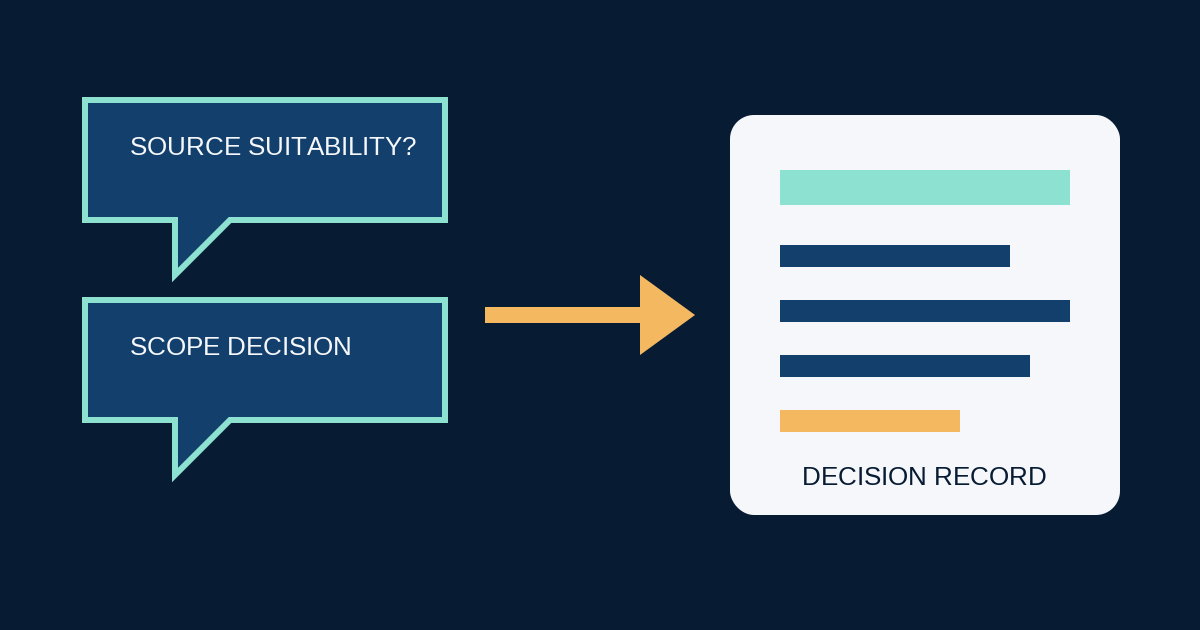
What Editorial Decisions Disappear When Review Comments Are Resolved?
A qualitative study design for preserving decision evidence without turning article review into permanent transcript storage.
Can an Offshore Publishing Team Prove a Fact Correction Reached Every Draft?
Research on correction propagation, version evidence, and decision ownership in distributed article production.
Does a Stable Publishing Cutoff Improve Offshore Research Handoffs?
A measurement design for testing cutoff stability, late evidence, and review quality in a daily article routine.
How Much Search Time Does an Ambiguous Offshore Research Brief Create?
A field-ready method for separating useful discovery from avoidable search caused by unclear article briefs.
When Should an Offshore Researcher Record That Evidence Was Not Found?
Research on negative search evidence, stopping rules, and cautious claims in recurring article production.
When Does an Offshore Article Queue Become Too Old to Trust?
Research on how queue age, waiting states, and evidence freshness affect a recurring offshore article routine.
Can a Content Brief Carry Enough Evidence for an Offshore Decision?
A study of how recurring article briefs can preserve reader intent, evidence boundaries, and approval decisions across an offshore handoff.
Can an Offshore Content Handoff Preserve Continuity When Roles Change?
Research on continuity records, relief coverage, and the information a daily offshore article routine must carry through a handoff.
How Much Editorial Review Can a Daily Offshore Article Routine Absorb?
A bounded study of review load, correction depth, and manager capacity in recurring offshore article publishing.
What Should an Offshore Researcher Do When Sources Conflict?
Evidence-led research on source conflict, escalation, and editorial boundaries in distributed article research.

What Should Access Recertification Check for Offshore Editorial Roles?
Research on proportionate access reviews for offshore researchers, writers, editors, and publishing coordinators.

How Much Evidence Survives an Offshore Editorial Handoff?
A research review of evidence retention when offshore researchers, writers, and reviewers work across recurring article cycles.
Can Review-Queue Sampling Reveal Quality in Offshore Article Publishing?
An evidence-led study of how representative sampling can expose review risk in recurring offshore editorial work.

What Manager Span Can a Recurring Offshore Publishing Routine Support?
A bounded research framework for relating manager attention, exception load, and role design in offshore article operations.
How Quickly Does Source Freshness Decay in Offshore Research Publishing?
A methodology for deciding when an offshore article source remains usable, needs rechecking, or should be retired.

Research question: What does rework reveal about offshore article design?
A research memo on separating writing defects, brief defects, and review defects in Philippines-based article support.

Research question: Can an offshore content calendar protect daily publishing quality?
Evidence-led analysis of whether a bounded offshore content calendar can support daily articles without transferring editorial judgment.

Research question: How much editorial review capacity does offshore content need?
Research on review load, correction depth, and the manager boundary for a daily offshore article lane.

Research question: Which access risks change an offshore article role?
Evidence-led examination of access minimization, editorial systems, and escalation when offshore article support handles site information.

Research question: What evidence lane fits Philippines-based research support?
A bounded study of source collection, claim traceability, and review ownership in an offshore research support role.

Research Brief: Offshore Resourcing Operations Access Governance
Research Brief: Offshore Resourcing Operations Access Governance: evidence-led guidance for Offshore Resourcing.

Research Brief: Offshore Resourcing Operations Exception Aging Patterns
Research Brief: Offshore Resourcing Operations Exception Aging Patterns: evidence-led guidance for Offshore Resourcing.

Research Brief: Offshore Resourcing Operations Handoff Reliability
Research Brief: Offshore Resourcing Operations Handoff Reliability: evidence-led guidance for Offshore Resourcing.

Research Brief: Offshore Resourcing Operations Review Consistency
Research Brief: Offshore Resourcing Operations Review Consistency: evidence-led guidance for Offshore Resourcing.

Research Brief: Offshore Resourcing Operations Source Quality Evidence
Research Brief: Offshore Resourcing Operations Source Quality Evidence: evidence-led guidance for Offshore Resourcing.

When does source diversity improve offshore article research?
A bounded study of source diversity, independence, and citation confidence for offshore research articles.
Can reviewer calibration improve offshore research consistency?
A study of shared rubrics, disagreement, and reviewer calibration for offshore article research and editing.
How can offshore content research avoid sample bias?
A practical research examination of selection effects when offshore teams gather evidence for business articles.
Where does context disappear in an offshore article handoff?
Research on the information that gets lost between offshore research, writing, review, and publication.
How much evidence should an offshore research brief contain before drafting?
A bounded study of evidence density, source selection, and decision quality in offshore article research.
How should an offshore research brief represent reader risk?
Research on matching evidence depth and review effort to the consequence of a reader acting on an article.
Does review latency change the risk of offshore research claims?
An evidence-led examination of delay, freshness, and review controls for offshore research publishing.
What should trigger escalation in an offshore research role?
Research into escalation thresholds for offshore content researchers handling uncertainty, access, and sensitive claims.
What does translation ambiguity do to offshore research findings?
An evidence-led look at terminology, translation, and interpretation risk in distributed offshore content research.
How should offshore research teams detect evidence that has decayed?
Research on update decay, source monitoring, and maintenance ownership for a daily offshore content routine.

Evidence quality in offshore candidate screening records
Research on whether candidate screening records contain enough evidence for a client decision without turning coordination into selection authority.
Context switching in distributed administrative work
Research on how fragmented queues change the review and role design of Philippines based administrative support.
Decision rights and exception burden in offshore operations
Evidence-led research on how exception volume changes the boundary between offshore execution and client-owned decisions.
Documentation debt in distributed support roles
Research on how missing or stale role documentation affects the safety and scalability of Philippines based support.
Forecast error in recurring offshore workload
Research on how forecast error, not just average volume, should shape a Philippines based support role.

Manager span of control and offshore support review
A bounded review of how manager capacity changes the review design for Philippines based offshore support roles.

Segregation of duties in offshore recruitment administration
Research on separating record preparation, approval, and audit in Philippines based recruitment administration.

Task modularity as a predictor of offshore role fit
Research on whether the structure of recurring work, rather than its job title, indicates a good fit for Philippines based offshore support.

Training transfer in cross-border support roles
Evidence-led research on whether training is used in live Philippines based support work after instruction ends.
Weighted accuracy for measuring offshore support quality
Research on why a single accuracy percentage can hide the difference between harmless corrections and high-impact mistakes in offshore support work.
Measuring async handoff completeness in distributed support roles
Evidence-led research on async handoffs in distributed support and operations roles.
Capacity variability in recurring offshore support work
Evidence-led research on capacity variability in distributed support and operations roles.
Cross-cultural service recovery and customer trust
Evidence-led research on service recovery in distributed support and operations roles.
Data minimization for offshore support assignments
Evidence-led research on data minimization in distributed support and operations roles.
Knowledge-transfer decay in remote support teams
Evidence-led research on knowledge transfer in distributed support and operations roles.
Onboarding transferability in distributed support roles
Evidence-led research on onboarding transferability in distributed support and operations roles.
Role clarity and escalation load in distributed operations
Evidence-led research on role clarity in distributed support and operations roles.
Sampling design for measuring remote work quality
Evidence-led research on quality sampling in distributed support and operations roles.
Time-zone overlap and service reliability in offshore support
Evidence-led research on time-zone overlap in distributed support and operations roles.
Written context and decision quality across distributed teams
Evidence-led research on written context in distributed support and operations roles.
Separating language fluency from customer support quality
Evidence-led research on evaluating customer support quality across language, culture, and distributed service contexts.
Data-handling controls for distributed content research roles
Research on matching data-handling controls to the actual information exposure of remote content research and support work.
How to measure continuity risk in an offshore support team
Research on leading indicators of continuity risk for businesses that depend on distributed support capacity.
What response latency reveals about remote customer support coverage
Research on measuring response latency, overlap, and queue coverage when customer support work is distributed across locations.
Measuring time to value for a distributed content role
A research model for measuring when a remote content specialist becomes useful without confusing speed with readiness.
Building a skills taxonomy for remote operations hiring
A research framework for translating broad remote operations titles into observable skills and bounded responsibilities.
Digital literacy signals that predict reliable remote role performance
An evidence-led framework for distinguishing tool familiarity from the digital work habits that make remote roles dependable.
What retention evidence can and cannot tell a remote staffing plan
A bounded review of retention signals that should inform remote staffing plans without turning correlation into a promise.
Why workload variability matters when planning remote support capacity
An analytical guide to separating average workload from the variability that determines practical remote support capacity.
Testing written communication quality in distributed operations roles
Research on evaluating concise written communication for remote operations, support, and administrative roles.
An evidence matrix for evaluating offshore candidates
A source-backed way to connect role requirements with fair, observable hiring evidence.
Measuring time to value in offshore onboarding
Which signals show whether a remote hire is becoming useful without confusing activity with readiness.
How role scope drift affects offshore hiring decisions
A research view of why vague role boundaries create avoidable hiring and handoff risk for distributed support teams.

A continuity risk model for offshore support teams
How buyers can distinguish individual dependency from resilient remote team capacity.
Reading workforce data when hiring in the Philippines
How to use public labor and skills evidence without turning national averages into promises about individual candidates.
Why remote access risk should be mapped by role
A practical analysis of least-privilege access for offshore support, research, and coordination roles.

Why accessibility capability belongs in content hiring
A research-led case for assessing accessibility knowledge when resourcing remote editorial and web support roles.

Signals for sizing remote editorial capacity
How to estimate capacity from demand, complexity, and review effort without relying on simplistic article counts.
Comparing coverage models for remote support teams
How overlap, handoffs, and service windows shape the right offshore support structure.

What makes a research brief decision-ready
A framework for separating a useful evidence brief from a collection of disconnected links.

Content claim confidence scoring
A lightweight scoring method for separating strong evidence, qualified findings, and editorial recommendations.
Content research query clustering
A method for grouping related search questions into useful research clusters without creating overlapping articles.

Daily research source budgeting
How to allocate research time across discovery, verification, synthesis, and review for a dependable article cadence.
Offshore article rework taxonomy
A practical classification for turning recurring article corrections into better briefs, reviews, and team routines.
Offshore content handoff risk assessment
A risk model for moving briefs, drafts, evidence, and approvals across time zones and ownership boundaries.
Offshore research role scorecard design
A scorecard for defining research quality, source handling, handoffs, and escalation expectations for distributed teams.
Remote content access review cadence
A routine for reviewing permissions to briefs, source registers, drafts, and publishing tools across an offshore content team.

Remote content brief acceptance gates
A practical evidence model for accepting briefs before distributed writers begin production.
Remote editorial capacity buffer design
A planning framework for protecting daily article output when review demand, leave, or rework varies.
Research article methodology notes
A transparent structure for explaining methods, limitations, source selection, and interpretation in operational research.
Research article table standards
A table design standard that keeps operational research readable, comparable, and traceable to its evidence.

Research source expiry monitoring
A repeatable way to flag dated evidence before a research article becomes misleading or difficult to defend.
Content Brief Change Control
A simple change-control routine for keeping research briefs accurate as scope and evidence evolve.
Content Operations Contingency Planning
How research teams keep essential article work moving when an owner, source, or tool becomes unavailable.
Editorial Calendar Load Balancing
A research-led way to balance editorial calendars across urgent work, planned clusters, and review capacity.

Offshore Research Access Controls
A practical access routine for keeping distributed research work usable, reviewable, and appropriately protected.
Remote Content Handoff Acceptance
The evidence and ownership checks that make a remote content handoff ready for the next stage.
Remote Editorial Coverage Planning
How distributed content teams plan reliable coverage across research, drafting, review, and publishing.
Remote Research Review Rubric
A consistent rubric for reviewing evidence, structure, clarity, and usefulness in distributed research work.

Research Article Refresh Triggers
The signals that tell an editorial team when a research article needs evidence, structure, or metadata review.
Research Brief Source Budgeting
How to plan source collection time without trading away evidence quality.
Research Claim Register Design
A compact design for tracking article claims, sources, owners, and verification status.
Research Fact Checking Escalation Paths
How research teams route uncertain claims before they become publication defects.
Research Link Integrity Routine
A lightweight routine for keeping research citations, internal links, and related cards useful.
Research Metadata Review Checklist
A final metadata check for accurate, consistent, and discoverable research articles.
Research Publication Readiness Scorecard
A final scorecard for confirming that a Research article is complete, evidenced, and ready for the GitHub publication boundary.
Research Table Design for Claims
A guide to making evidence tables readable, traceable, and useful in research articles.
Article Source Triangulation Method
A repeatable method for testing important article claims against independent evidence.
Content Brief Acceptance Scorecard for Research Teams
A practical scorecard for deciding whether a research brief is ready for production.
Content Evidence Matrix for Research Claims
How to map article claims to sources, limitations, reviewers, and final wording.

Content QA Severity Matrix for Research Publishing
A severity matrix for routing factual, structural, accessibility, and metadata defects.
Daily Content Capacity Planning: A Research Framework
How to match a daily article queue to real editorial capacity and review time.
Daily Research Queue Aging Rules
Rules for identifying stale research work before it quietly becomes a publishing risk.
Editorial Handoff Control Points for Distributed Teams
A control-point model for moving research articles from brief to publication without losing context.
Research Article Internal Link Map
A lightweight method for connecting research articles by reader task, evidence, and next action.
Research Article Refresh Priority Model
How to rank research articles for refreshes using evidence age, audience value, and operational risk.
Research Metadata Completeness Check
A pre-publication check for titles, descriptions, dates, canonical identity, and structured metadata.
Research Publishing Exception Log
How to record quality exceptions without hiding blockers or lowering the publication standard.
Source Register Fields for Article Production
The minimum source-register fields that make article evidence traceable and refreshable.
Content accessibility review for research articles
A practical review pass for headings, tables, links, language, and non-text content.
Article performance review framework
A measurement framework for reviewing article usefulness, quality signals, maintenance needs, and next actions.
Content brief research queue design
A queue model for ranking article briefs by intent, evidence readiness, effort, and business relevance.
Knowledge base maintenance routines for offshore teams
A maintenance cadence for checking stale claims, broken links, ownership, and article reuse.
Offshore article production workflow benchmarks
A practical evidence-led workflow for planning, drafting, reviewing, and publishing recurring articles.
Offshore content continuity plan
A continuity framework for keeping recurring research and article publishing moving through absences or outages.
Offshore content QA checklist
A final quality checklist for evidence, structure, links, metadata, accessibility, and handoff readiness.

Offshore editorial review SLA design
A practical framework for setting review windows, escalation rules, ownership, and evidence standards.
Offshore SEO research controls
A disciplined process for matching search intent, evidence, internal links, and article uniqueness.
Remote content calendar controls
How distributed publishing teams can manage cadence, ownership, dependencies, and review capacity.
Remote research team capacity planning
How to plan research, writing, review, and maintenance capacity without overloading a distributed team.
Remote writer handoff controls
How to make article handoffs complete, searchable, and safe across distributed research and writing teams.
Research brief quality gates for offshore teams
A source-first brief template that aligns search intent, evidence, audience, and article acceptance.
Research source library structure
A lightweight structure for organizing authoritative sources, topics, claims, dates, and reuse decisions.
Secure remote content access controls
A practical access model for distributed article research, drafting, review, and publishing work.
Source verification workflow for research articles
A repeatable method for checking source authority, dates, claims, and citation traceability.
Philippines offshore staffing costs and planning benchmarks
A sourced planning guide for comparing wages, provider costs, controls, and total operating cost.
Philippines services workforce context
Current primary sources and interpretation boundaries for teams evaluating Philippines-based service roles.
Offshore team quality scorecard benchmarks
A measurement framework for accuracy, timeliness, queue health, rework, and escalation quality.
Offshore team onboarding control checklist
Evidence-backed controls for access, sample work, approvals, privacy, and first-month expansion.
Read the evidence before applying the recommendation
Each research page should make assumptions visible, separate sourced facts from recommendations, and translate findings into a role brief your team can review.